


.webp)
.webp)

Tankless Water Heater Solutions in Fallbrook: What You Need to Know
Discover why a tankless water heater Fallbrook CA provides endless hot water & huge savings. Get expert installation & service now!
Why Homeowners in Fallbrook Are Choosing On-Demand Hot Water
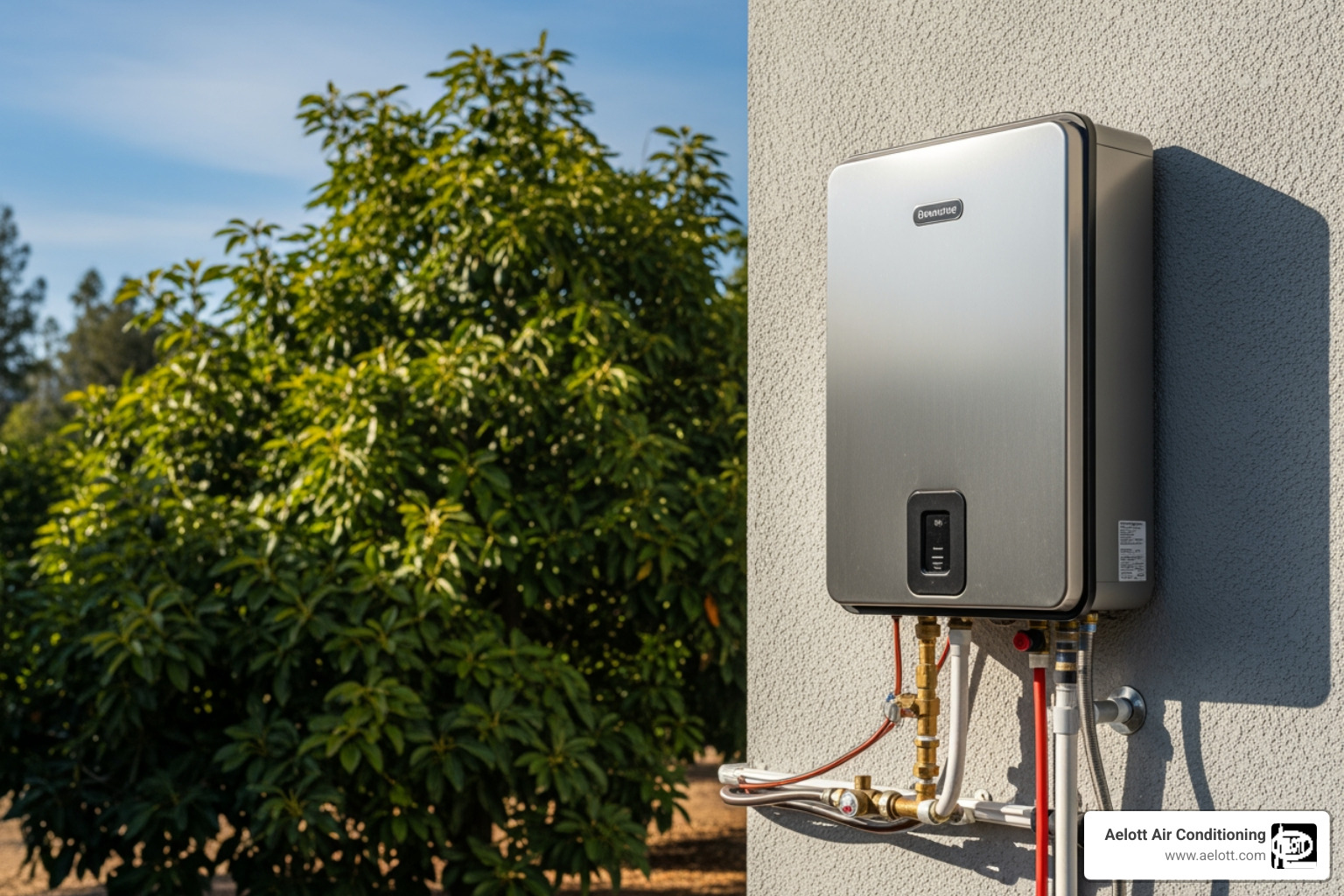
If you're searching for tankless water heater fallbrook ca services, you're likely tired of running out of hot water or dealing with a bulky, inefficient tank that heats water around the clock. Tankless water heaters solve these problems by heating water only when you need it, eliminating standby heat loss and providing a continuous supply of hot water for your entire household.
Quick Guide to Tankless Water Heater Services in Fallbrook:
- Installation - Professional sizing and setup for whole-house or point-of-use systems
- Repair - Troubleshooting ignition failures, mineral buildup, and error codes
- Maintenance - Annual descaling to prevent hard water damage and maintain efficiency
- Replacement - Upgrading from traditional tanks or aging tankless units
For comprehensive plumbing services, explore our water heater solutions, or contact our Fallbrook team for expert installation and repair.
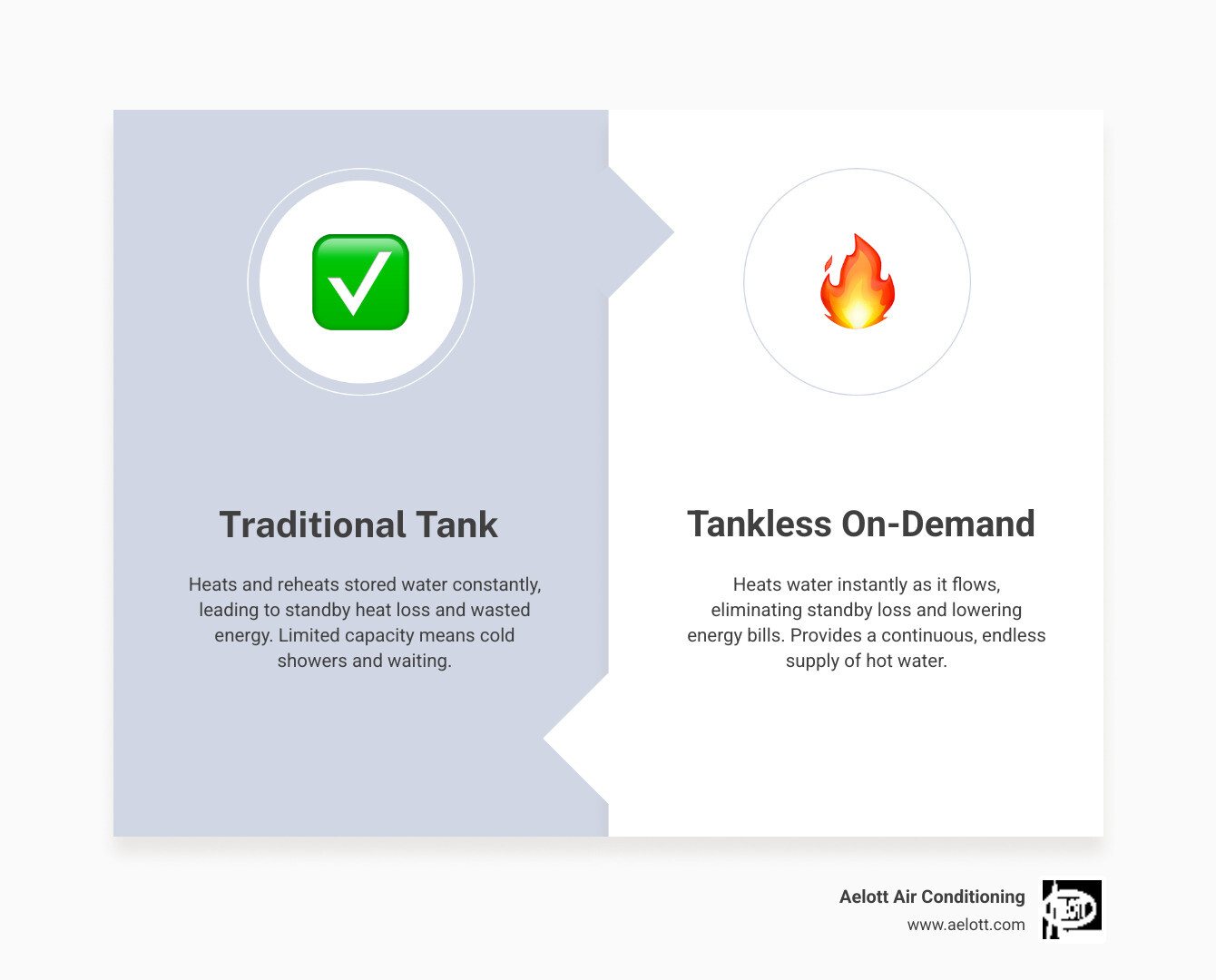
Running out of hot water during a morning shower or waiting for the tank to reheat before doing laundry are frustrations many Fallbrook homeowners know too well. Traditional tank water heaters constantly heat and reheat stored water, wasting energy even when you're not using hot water. They also have limited capacity, meaning once the tank empties, you're left waiting.
Tankless water heaters work differently. They heat water instantly as it flows through the unit, delivering hot water on demand without the need for a storage tank. This means no more cold showers, no standby heat loss, and improved energy efficiency. For Fallbrook residents dealing with hard water, regular maintenance keeps these systems running efficiently for decades.
Whether you're building a new home, remodeling, or simply ready to upgrade from an aging tank, understanding how tankless systems work and what to expect from installation and maintenance will help you make the right choice for your household.
Tankless vs. Traditional: A Clear Comparison
When it comes to providing your home with hot water, the choice between a tankless and a traditional water heater is a significant one. While both serve the same basic purpose, their operational philosophies and long-term benefits differ dramatically. Understanding these distinctions is crucial for Fallbrook homeowners looking to make an informed decision for their property.
Let's take a quick look at how these two systems stack up:
| Feature | Tankless Water Heater | Traditional Tank Water Heater |
|---|---|---|
| Lifespan | Up to 20+ years (with proper maintenance) | 10-15 years |
| Size | Compact, wall-mounted, saves floor space | Large, bulky, requires dedicated storage space |
| Energy Use | Heats water on-demand, highly energy-efficient | Heats and reheats stored water constantly, less efficient |
| Water Supply | Continuous, endless hot water | Limited by tank capacity, can run out |
One of the most compelling arguments for tankless systems is the elimination of what we call "standby heat loss." Traditional tank heaters continuously heat a large volume of water, day and night, even when no one is home. This constant heating and reheating of water means that a significant portion of your energy bill is literally going towards keeping water hot just in case you need it. This standby heat loss contributes to unnecessary energy consumption. Tankless units, on the other hand, only activate when you turn on a hot water tap, consuming energy solely when there's a demand for hot water.
Beyond energy, tankless water heaters offer a significant advantage in terms of space. Their compact, wall-mounted design frees up valuable floor space that a bulky traditional tank would occupy, which can be a real bonus in smaller homes or for those looking to maximize utility areas.
Finally, the promise of continuous hot water is perhaps the most celebrated benefit. Imagine never having to rush a shower or stagger laundry days to ensure enough hot water for everyone. With a properly sized tankless unit, that dream becomes a reality.
How They Differ in Operation
The operational difference between these two systems is fundamental. Traditional storage tank heaters function like giant kettles, holding 30 to 80 gallons (or more) of water and keeping it at a set temperature around the clock. This requires constant energy expenditure to reheat the water as it cools or is used. It's like leaving your oven on all day, just in case you want to bake a cookie. This constant heating and reheating is where much of the energy waste occurs.
Tankless water heaters, however, operate on an "on-demand" principle. When you open a hot water faucet, cold water flows into the unit. Inside, powerful gas burners or electric heating elements quickly raise the water's temperature to your desired setting as it passes through. The hot water is then delivered directly to your faucet, without any storage. Once the faucet is turned off, the unit powers down, conserving energy. These systems can be powered by either gas or electricity, with gas models often requiring a higher BTU input than traditional tanks, which is an important consideration for installation.
Lifespan and Long-Term Value
When evaluating any home appliance, its lifespan and long-term value are key considerations. Traditional tank water heaters typically last between 10 to 15 years before they begin to show signs of age, such as decreased efficiency, leaks, or rust. Their lifespan can be influenced by factors like water quality and maintenance, but generally, their internal components are subject to wear and tear from constant heating and cooling cycles.
Tankless water heaters, with proper maintenance, can last significantly longer – often up to 20 years or even more. This extended lifespan is one of the reasons many homeowners view them as a smart, long-term addition to their home. The key phrase here, however, is "proper maintenance." Regular servicing, particularly in areas with hard water like Fallbrook, is crucial to achieving this extended lifespan. Neglecting maintenance can lead to issues that shorten the unit's life, just as it would with any complex appliance. When regularly serviced, tankless units can provide decades of reliable hot water, potentially twice the service life of a standard tank model.
Why Fallbrook Homeowners are Switching to Tankless
Fallbrook residents, known for their appreciation of efficiency and sustainable living, are increasingly recognizing the profound advantages of tankless water heaters. It's more than just a trend; it's a practical decision driven by a desire for comfort, reliability, and a more environmentally conscious home.
Imagine a busy morning in your Fallbrook home: one person is showering, another is running the dishwasher, and someone else is doing a load of laundry – all requiring hot water simultaneously. With a traditional tank, this scenario often leads to a sudden blast of cold water for the last person in the shower. Tankless systems eliminate this problem, providing continuous hot water that keeps up with your family's demands.
This shift isn't just about convenience; it's about making smart choices for your home. The improved energy efficiency reduces environmental impact, and the added reliability brings a peace of mind that is invaluable.
The Advantage of Energy Efficiency
The most significant draw for many homeowners considering a tankless water heater is its superior energy efficiency. As we've discussed, traditional tank heaters suffer from standby heat loss, constantly expending energy to keep a large tank of water hot, even when it's not being used. Tankless units completely eliminate this waste. They only fire up when there's a demand for hot water, making them inherently more energy-efficient.
This on-demand heating translates directly into reduced energy consumption. We believe in providing solutions that improve your comfort and home's performance. For more insights into energy-efficient solutions, you can find more info about tankless water heater installation in Escondido ca.
Benefits of a Tankless Water Heater in Fallbrook, CA
Beyond energy savings, a tankless water heater Fallbrook CA installation offers several unique benefits custom to the needs of local homeowners:
- Endless Hot Water Supply: This is the flagship benefit. No matter how many showers are running, how many loads of laundry are being done, or how many dishes are being washed, a properly sized tankless unit will not run out of hot water. This is ideal for large families or homes with frequent guests, accommodating peak usage times with ease. The days of scheduling showers or waiting for the tank to refill are behind us.
- Space Savings: Fallbrook homes, like many in Southern California, often value every square foot. The compact design of tankless units allows them to be mounted on a wall, freeing up valuable floor space in utility closets, garages, or basements. This space can then be used for storage, another appliance, or simply to reduce clutter.
- Increased Home Appeal: Upgrading to modern, energy-efficient appliances like a tankless water heater can improve your home's appeal. Prospective buyers often look for features that promise improved efficiency and modern conveniences.
- Reduced Risk of Water Damage: Without a large tank storing dozens of gallons of water, the risk of a catastrophic leak or burst tank is significantly reduced. This protects your home from potential water damage, which can be extensive and disruptive to repair.
- Potential for Local Incentives: While specific local rebates for Fallbrook can vary and change, many areas in California offer incentives for homeowners to upgrade to energy-efficient appliances. We can help you explore any available programs for your tankless water heater installation.
Your Guide to Tankless Water Heater Fallbrook CA Services
Investing in a tankless water heater Fallbrook CA means choosing a system that provides consistent comfort and long-term efficiency. However, to truly reap these benefits, proper sizing, professional installation, and diligent maintenance are absolutely essential. This is where our expertise comes into play, guiding you through each step to ensure your system performs optimally for years to come.
A clean installation with proper venting and piping is not just about aesthetics; it's about safety, efficiency, and compliance with local codes. We ensure every aspect of your tankless water heater installation, from sizing to maintenance, is handled with precision and care.
How to Choose the Right Size for Your Home
Sizing a tankless water heater isn't a one-size-fits-all proposition. It requires careful consideration of your household's hot water demands to ensure you receive continuous hot water without any temperature fluctuations. The two primary factors we consider are flow rate and temperature rise.
Calculating Flow Rate (GPM): This refers to the maximum amount of hot water, measured in gallons per minute (GPM), that your household will need at any given time. We determine this by identifying how many hot water appliances and fixtures might be used simultaneously. For example, a shower typically uses about 4 GPM, a kitchen faucet around 4 GPM, and a bathroom faucet about 3 GPM. If you envision a scenario where two showers and a dishwasher are running at the same time, you'd need a unit capable of handling approximately 11-12 GPM (4+4+4 or 4+4+3, depending on the exact appliances). A tankless water heater is only as good as the number of gallons it can produce per minute, so accurate calculation is key. For more in-depth information, you can explore more info about tankless water heaters in San Marcos ca.
Temperature Rise: This is the difference between the incoming cold water temperature (groundwater temperature) and your desired hot water output temperature. Fallbrook's groundwater temperatures can fluctuate seasonally, affecting how hard the unit needs to work. A unit might produce 8 GPM with a 50-degree temperature rise but only 5 GPM with a 70-degree rise. We account for these local conditions to ensure your system is powerful enough to meet your demands year-round.
We'll work with you to assess your specific needs, considering your household size and typical usage patterns, to recommend a unit that's perfectly sized for your Fallbrook home.
Key Installation Considerations
Installing a tankless water heater is a more complex process than simply swapping out a traditional tank. It often requires significant upgrades to your home's existing infrastructure, which is why professional installation is paramount.
- Venting Requirements: Tankless water heaters require specific venting systems to safely exhaust combustion gases to the outside. Unlike traditional tanks, which might use existing chimneys, tankless units often need dedicated, sealed venting that can be routed horizontally or vertically.
- Gas Line Capacity: This is one of the most common and critical considerations for gas-powered tankless units. Tankless water heaters can demand significantly more BTU input than a traditional storage tank — often four to five times as much, requiring a gas supply line with a capacity of at least 200,000 Btu/hr. Your existing gas line may not be sufficient, necessitating an upgrade to a larger line or even a new gas meter from your utility provider. This is a primary factor in the overall installation complexity.
- Electrical Requirements: While gas-powered, tankless units still require a small amount of electricity to power their electronic ignition, controls, and anti-freeze protection. This typically means a dedicated 120-volt electrical outlet nearby.
- Location of Unit: While compact, the unit still needs adequate clearance for access and working space, as well as proximity to water lines and gas supply. We ensure the chosen location optimizes performance and adheres to all safety regulations.
Navigating these technical requirements can be daunting, but our experienced technicians are well-versed in Fallbrook's specific codes and conditions. For more details on these vital considerations, you can refer to more info about tankless water heaters in Vista ca.
Required Maintenance for a Tankless Water Heater in Fallbrook, CA
Just like any high-performance appliance, a tankless water heater requires regular maintenance to ensure its longevity and efficiency. This is especially true for homes in Fallbrook, where hard water is a common concern.
The primary maintenance task for tankless units is descaling, also known as flushing. Hard water contains high levels of minerals like calcium and magnesium. Over time, these minerals can accumulate and form scale deposits inside the unit's heat exchanger. This mineral buildup reduces the unit's efficiency, restricts water flow, and can eventually lead to significant repairs or even premature failure.
We recommend an annual inspection and descaling service for your tankless water heater. During this service, our technicians will:
- Flush the System: Using a specialized pump and a vinegar solution, we circulate the solution through the heat exchanger to dissolve and remove any mineral buildup.
- Inspect Components: We'll check all critical components, including the igniter, burners, sensors, and exhaust venting, to ensure they are functioning correctly and safely.
- Verify Settings: We'll confirm that the temperature settings and other controls are optimized for your comfort and energy efficiency.
Regular descaling not only prevents problems but also helps your tankless unit achieve its maximum lifespan, potentially lasting twice as long as a traditional tank. It's a simple step that contributes significantly to reliability and efficiency. For a comprehensive understanding of tankless water heater care, please refer to a guide to tankless maintenance in Vista ca.
Troubleshooting Common Tankless Water Heater Issues
Even with the best installation and maintenance, tankless water heaters can occasionally encounter issues. Understanding common problems can help you recognize when it's time to call for professional assistance.
- Mineral Buildup: As discussed, hard water leads to scale, which can reduce efficiency, cause strange noises, and even trigger error codes. Regular descaling is the preventative measure.
- Ignition Failure: If your unit fails to ignite, common culprits include an empty propane tank (if applicable), closed gas or water valves, or issues with the gas supply itself. Sometimes, a blocked air supply or exhaust can also prevent ignition, leading to an error code.
- Overload Protection: If too many hot water fixtures are running simultaneously, exceeding the unit's GPM capacity, the unit might struggle to provide hot water or shut down to prevent damage. This often results in lukewarm water or the unit simply turning off. Limiting simultaneous hot water use or resetting the unit can resolve this in the short term.
- Water Temperature Fluctuations: Inconsistent water temperature can stem from several issues, including mineral buildup, improper sizing for your demand, or problems with the unit's flow sensor or thermostat.
For a more detailed look at troubleshooting and repair, check out a guide to tankless water heater repair.
When to Call for Professional Repair
While some minor issues might have simple solutions, it's generally best to call our professional team if you experience any of the following with your tankless water heater Fallbrook CA:
- Error Codes: Your unit's digital display will often show an error code when something is amiss. These codes are specific and require professional interpretation to diagnose the underlying problem accurately.
- No Hot Water: If your unit isn't producing any hot water at all, it could indicate a serious issue with the gas supply, ignition system, or internal components.
- Low Water Pressure: A sudden drop in hot water pressure can signal a blockage, often due to mineral buildup, or a problem with the unit's internal flow restrictors.
- Strange Noises: Gurgling, banging, or rumbling sounds coming from your unit are not normal and often indicate scale buildup or other internal issues that require immediate attention.
Attempting DIY repairs on complex gas or electrical appliances can be dangerous and may void your warranty. Our skilled technicians are equipped to safely diagnose and resolve any issue your tankless water heater might be facing. If you're experiencing problems, don't hesitate to reach out for more info about water heater repair in Fallbrook ca.
Deciding Between Repair and Replacement
When your tankless water heater starts acting up, you'll eventually face the decision: repair or replace? Several factors influence this choice:
- Age of the Unit: While tankless units can last 20+ years, older units (15+ years) may experience more frequent breakdowns and declining efficiency. If your unit is nearing the end of its projected lifespan, replacement might be a better long-term solution than continuing with repairs.
- Frequency of Repairs: If your unit requires constant attention and repairs are becoming a regular occurrence, it may be time to consider investing in a new, more reliable system.
- System Efficiency Decline: Even if an older unit is still functional, its efficiency might have decreased over time. Newer models often boast superior energy efficiency ratings and advanced features that can lead to improved performance and comfort.
- Upgrading for Better Performance: Perhaps your current unit was undersized for your growing family, or you simply desire newer features like smart home integration or a built-in recirculation pump for instant hot water at the tap. Replacement offers an opportunity to upgrade to a system that better meets your current and future needs.
We can provide an honest assessment of your unit's condition, outlining the pros and cons of both repair and replacement options to help you make the best decision for your Fallbrook home. For information on tankless systems in neighboring areas, you can check out more info about tankless water heaters in Carlsbad ca.
Frequently Asked Questions about Tankless Water Heaters
Can a tankless system provide enough hot water for my whole house?
Yes, a properly sized whole-house unit is designed to meet the demands of multiple fixtures at once, providing a continuous flow of hot water for showers, laundry, and dishes without running out.
How does hard water in the Fallbrook area affect a tankless water heater?
Hard water contains high levels of minerals like calcium and magnesium, which can build up inside the unit as scale. This reduces efficiency and can lead to damage over time, making annual descaling maintenance essential.
Do tankless water heaters work during a power outage?
Electric tankless models will not function without power. Most gas-powered tankless models also require a small amount of electricity to power their electronic controls and will not operate during an outage unless connected to a backup power source.
Your Local Experts for On-Demand Hot Water
Upgrading your home's hot water system is a significant improvement in comfort and efficiency. Tankless technology offers undeniable benefits, from endless hot water to improved energy efficiency. For expert advice and professional installation, Aelott Air Conditioning has provided dependable service in the region since 1963. We're proud to bring our decades of experience, honest pricing, and 100% satisfaction guarantee to Fallbrook, ensuring you receive the best tankless water heater Fallbrook CA solutions available.
Don't let a lack of hot water disrupt your daily routine any longer. Contact our team in Fallbrook, CA for your tankless water heater needs today, and let us help you experience the difference of continuous, efficient hot water.
Other Blogs

Customer Testimonials
Go With Experience

This company has been providing HVAC services to my family for over 40 years! We have a lot of confidence and trust in them. Receptionist is also very nice and responsive. Helps to be an established customer.

The technician, Terry, who came to our house was very professional. Answered all of our questions. Explain to us areas of concern. Provided us with solutions.
I had a great experience purchasing a new circuit board for my Carrier system. Doug was knowledgeable, friendly, and helpful and Aelott was able to help quickly and efficiently. Many thanks to the whole Aelott team!
The team goes a great job on servicing my 4 systems in our building. We did a remodel at my house and did a great job re-routing and re-balancing the systems. Highly recommend the company. For service or replacement.
Doug with Aelott was very polite and very knowledgeable. He explained the current status of my forced air ducts and it’s related equipment. I would highly recommend Aelott Heating and Air to others.

HVAC Financing Available!
Get 0% Financing for 12 Months with Deferred Interest! Enjoy no payments and no interest on select plans.


Latest Blogs

.avif)
How to Run Your Furnace Efficiently: A Guide to Staying Warm This Winter
